

Nano Banana 2.1 API
Nano Banana 2.1 is Google's multimodal image generation and editing model, released to general availability on October 6, 2026, with product recontextualization, mask- and ink-based editing, and improved factual accuracy. Roko API serves it as an async task at $0.02 per 1K image, $0.03 per 2K, and $0.04 per 4K, across 14 aspect ratios.
- Public model ID
nano-banana-2.1- Output tiers
1K / 2K / 4K (1K default)- Billing
Per output by resolution- Endpoint
POST /v1/images/tasks- Catalog snapshot
What is Nano Banana 2.1?
Nano Banana 2.1 is the newest flagship of Google's Gemini image family (GA on 2026-10-06, upstream ID gemini-nano-banana-2.1), built for multimodal image generation and editing. Google highlights improved product recontextualization, mask- and ink-based editing, and factual accuracy, with photorealistic skin tones, detailed materials, and coherent lighting.
Built on the Gemini 3.6 Flash base, it natively supports image generation, multi-turn editing, interleaved image-and-text output, virtual try-on, and C2PA provenance, plus minimal/medium/high thinking levels and system instructions. In Google's own evaluations its text-to-image overall preference reaches 1050 (Elo), above Nano Banana 2's 990. Note that Google explicitly disallows temperature, topP, topK, seed, and logprobs — setting any returns an API error. The model card also concedes that small text can blur at 1K output, long paragraphs render poorly, and mask-based edits can leave artifacts.
Roko currently exposes 1K, 2K, and 4K tiers plus 14 aspect ratios (1:1 default), billed per output image. Calls run as async tasks — submit, then poll. Capabilities outside the form follow request validation.
Core capabilities
Product recontextualization
Google's headline capability: drop a product into entirely new scenes while keeping the subject consistent — an e-commerce and advertising staple.
Mask- and ink-based editing
Officially improved editing: region-specific fixes and ink-annotated changes, with untouched areas surviving multi-round iteration.
14 aspect ratios
From 1:8 and 8:1 ultra-wide to 21:9 cinematic, defaulting to 1:1 — banners and posters covered in one model.
Photoreal rendering, factual accuracy
Photorealistic skin tones, material detail, lighting, and coherent backgrounds, with improved factual accuracy in generated content.
Nano Banana 2.1 examples
Examples below are public showcase assets from the OpenArt and fal.ai model pages (sources labeled, not Roko-measured), illustrating the model's capability directions; Roko-measured cases will follow once a test key is available.
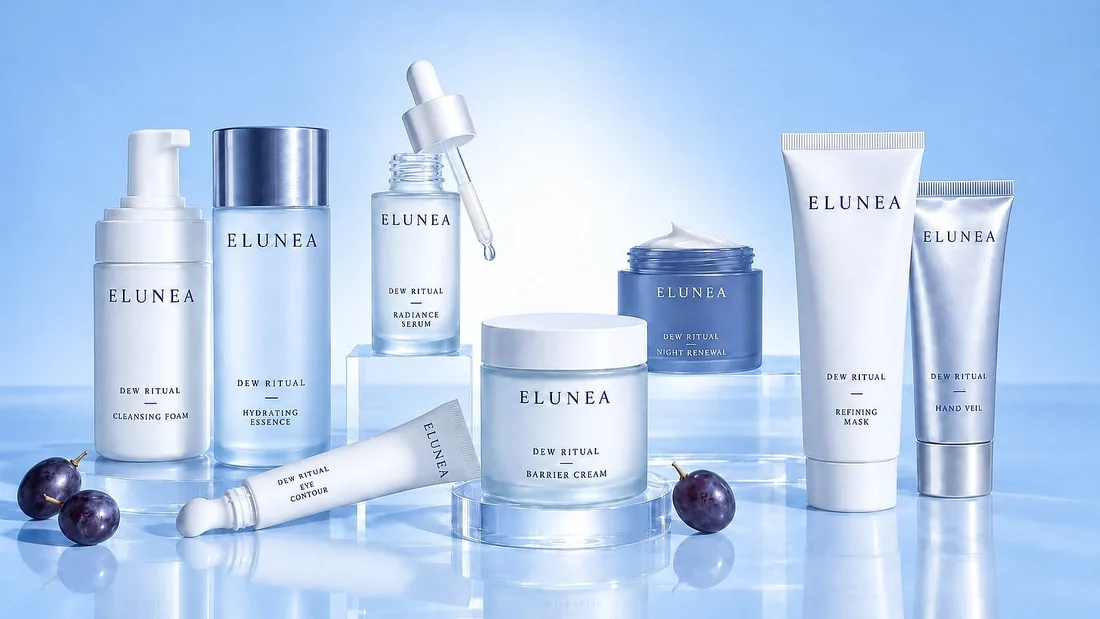
E-commerce finals: full product catalog
Generate a full product catalog for fictional skincare brand ELUNEA: cleansing foam, essence, serum, cream, hair mask, and hand cream on a light-blue waterlit background, legible label text, grape accents, commercial-photography finish
Bottle shapes, label text, and lighting hold across the whole SKU line with the brand and product names consistent — the design-completion direction Google highlights, aimed at e-commerce and brand asset production.
OpenArt 官方模型页演示素材 · 2026-10-07 核验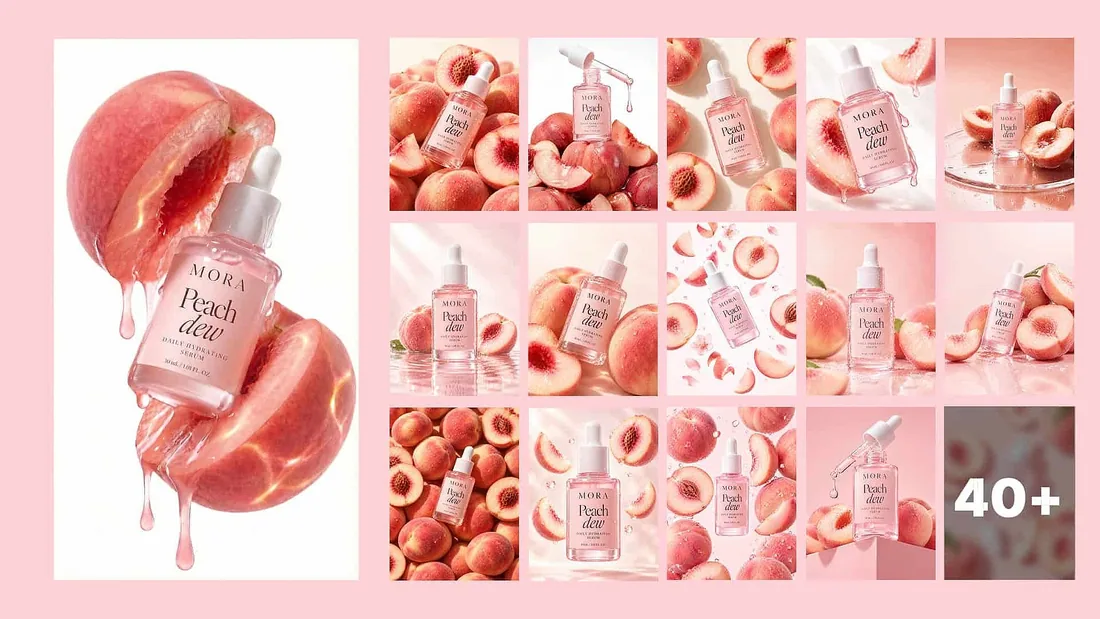
Batch assets: one SKU across 40+ scenes
Generate 40+ e-commerce assets for peach serum MORA Peach Dew: the same bottle and label repeated across peach scenes in pink tones, alternating water, slices, and whole fruit
Bottle shape, typography, and palette hold across dozens of frames — the subject-consistency upgrade Google calls out, suited to multi-variant ad asset production.
OpenArt 官方模型页演示素材 · 2026-10-07 核验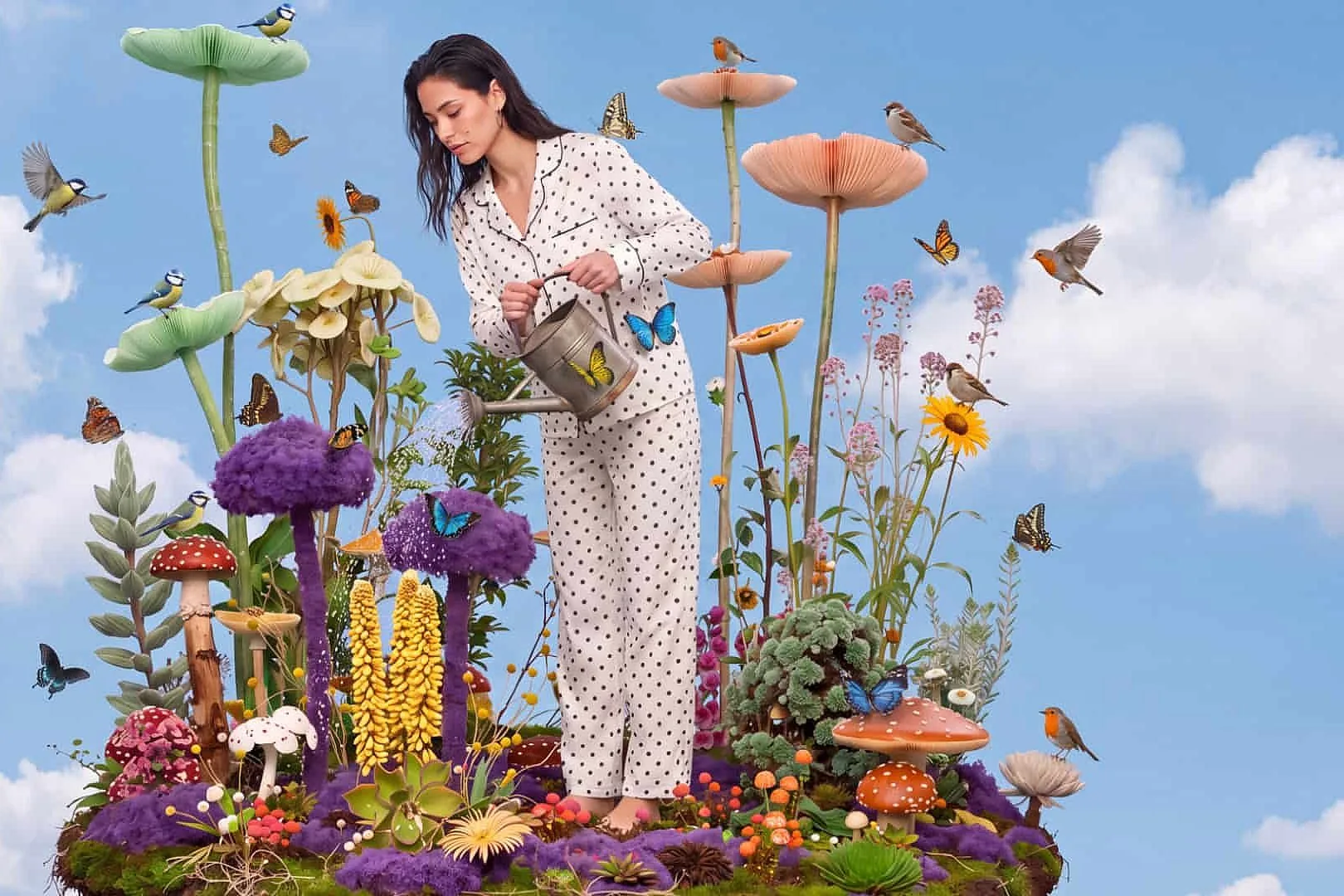
Multi-reference fusion: subject and props
Fuse multiple references (portrait, floral installation, sky, watering can) into one surreal piece: a person watering plants on a floating island, birds and butterflies in the sky
Google allows up to 14 reference images while keeping up to 4 characters and 10 objects consistent; in this demo the outfit, props, and sky each trace back to different references.
OpenArt 官方模型页演示素材 · 2026-10-07 核验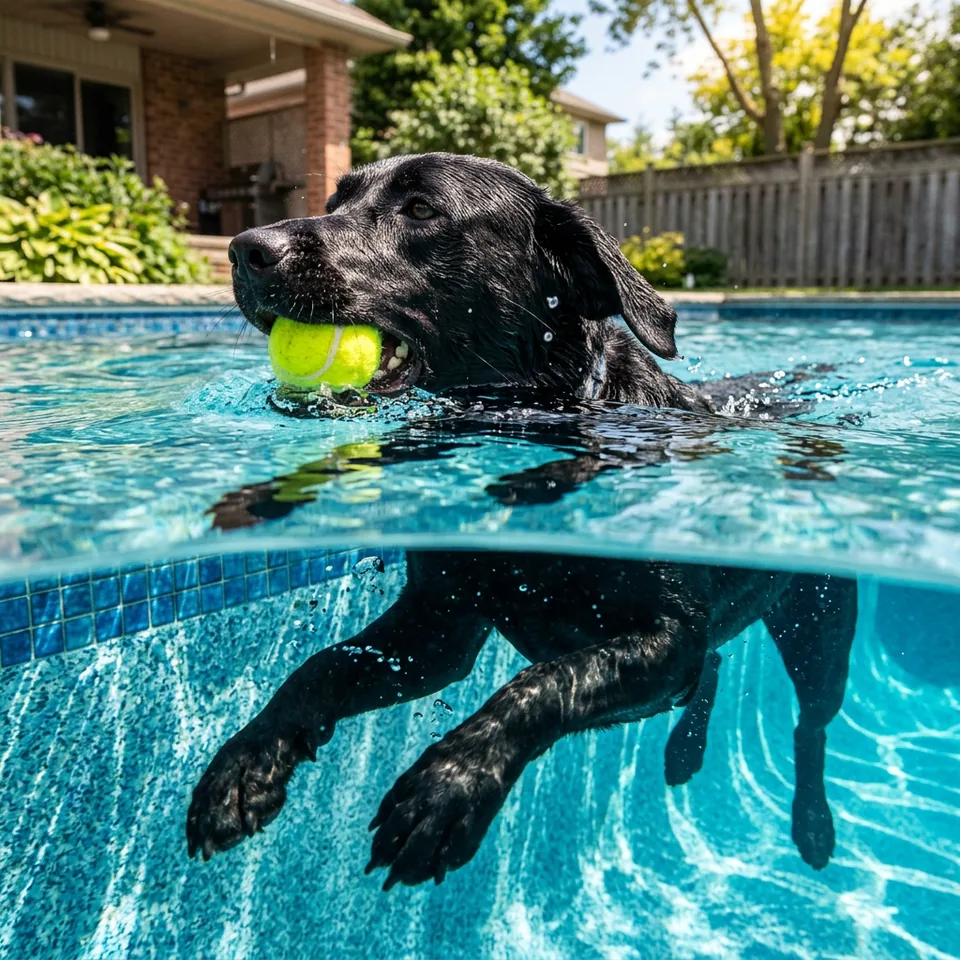
Photoreal rendering: above and below water
A black Labrador swimming in a pool with a tennis ball, split composition at the waterline, sharp detail above and below the surface, dappled sunlight, true photographic feel
Wet fur texture, water refraction, and background bokeh read close to real photography — Google's more natural-looking imagery emphasis is visible in this demo output.
fal.ai 模型页演示输出 · 2026-10-07 核验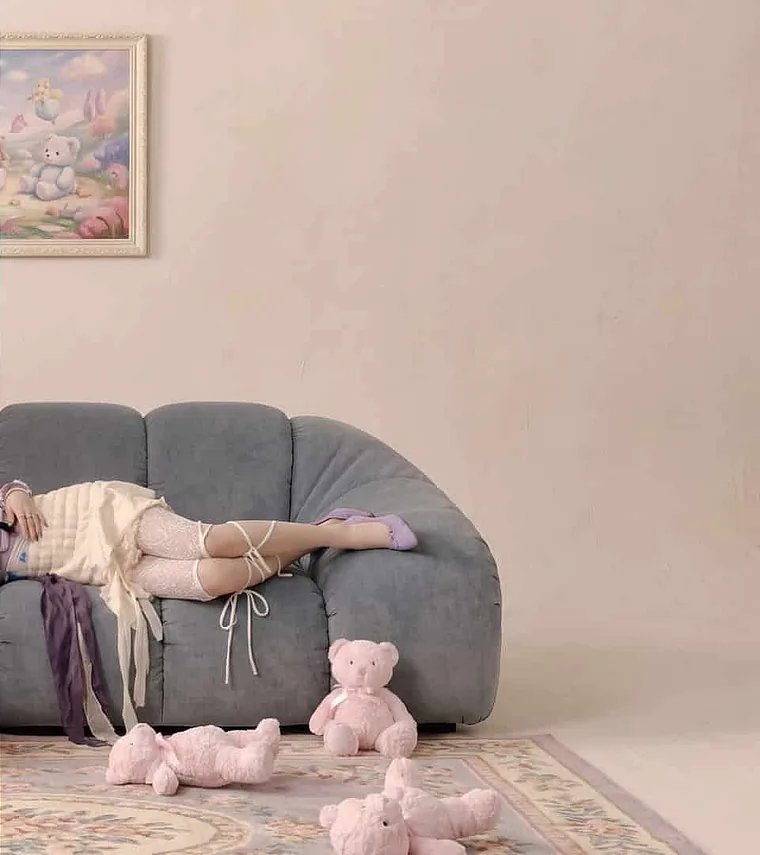
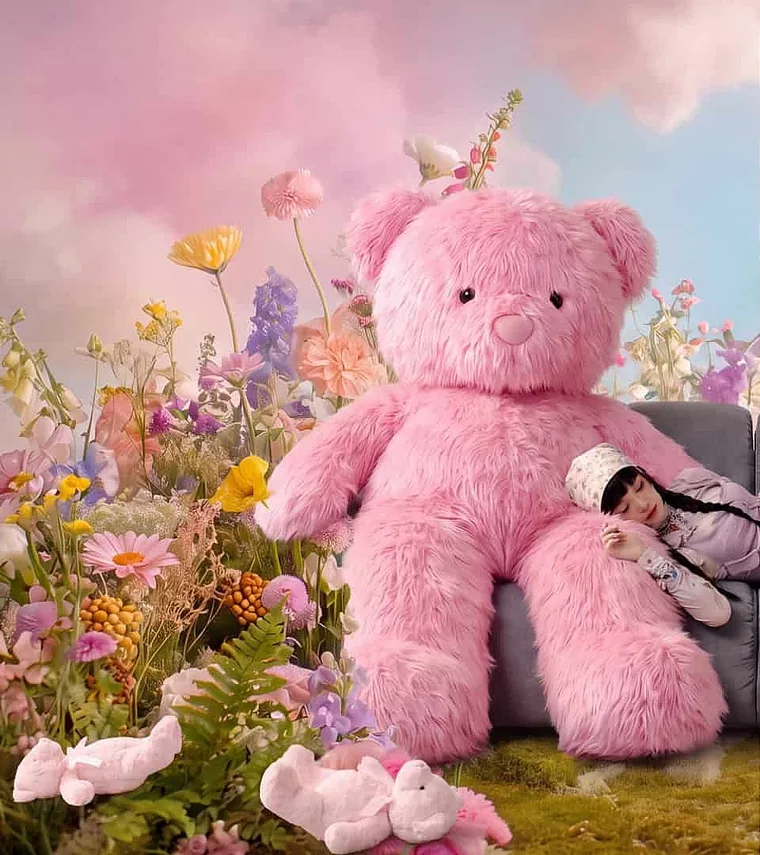
Recontextualization: living room to fantasy meadow
Keep the person and sofa placement unchanged and rebuild the background from a real living room into a flower-filled fantasy meadow with a pink sky and a giant teddy bear
A same-composition, two-scene comparison: pose and sofa structure retained while the environment swaps wholesale — Google's headline product recontextualization capability.
OpenArt 官方模型页演示素材 · 2026-10-07 核验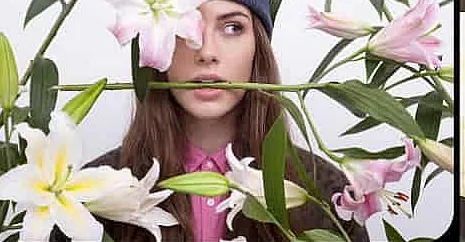
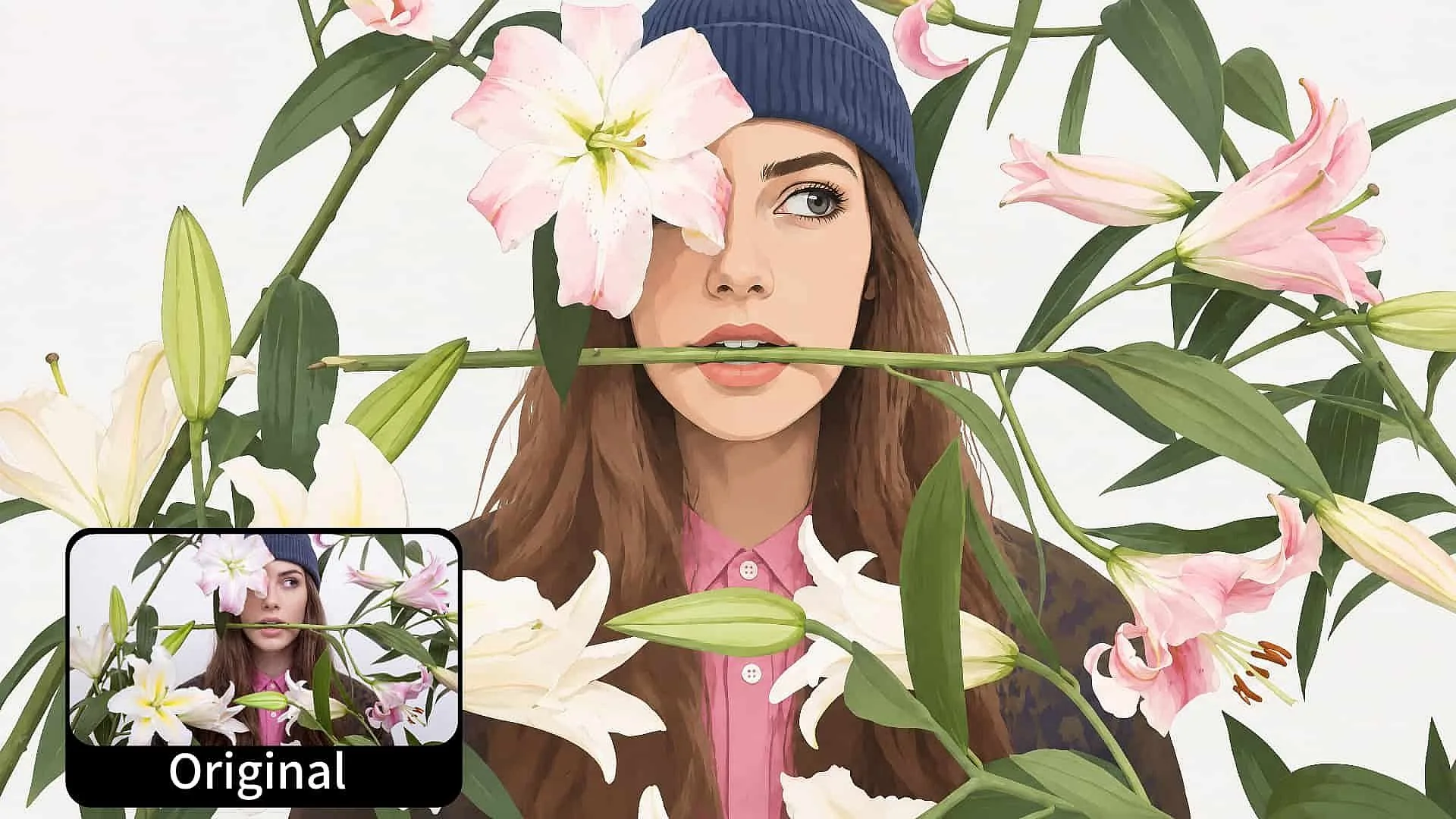
Style transfer: photo to illustration
Convert this photo of a person with lilies into a delicate illustration style while keeping the pose, outfit, and flower composition unchanged
Pose, clothing, and flower arrangement survive the photo-to-illustration transfer; the inset at the lower left of the demo shows the source photo (cropped out here as the input).
OpenArt 官方模型页演示素材 · 2026-10-07 核验Nano Banana 2.1 API pricing
Pricing is generated from the current Roko catalog and billed per output at the chosen resolution. Google bills upstream by tokens; Roko settles per image, so this page shows Roko catalog pricing only.
| Resolution | Price | Billing unit |
|---|---|---|
| 1k | $0.02 | per output |
| 2k | $0.03 | per output |
| 4k | $0.04 | per output |
Cost examples
Default tier — standard cost for social and web assets.
Typical spend for batch 4K output; failed images are not billed.
Parameters and supported scope
These fields come from the current public generation_config. Google also lists multi-turn editing, virtual try-on, and interleaved image-text output; capabilities and parameters outside the form follow request validation.
| Parameter | Values | Notes |
|---|---|---|
prompt | textarea | Describe the image to create or the changes to apply to references. · Required |
image_urls | url / base64 | Reference images may use URL or Base64. State what must stay and what may change. · Optional |
aspect_ratio | 1:1 / 1:4 / 1:8 / 2:3 / 3:2 / 3:4 / 4:1 / 4:3 / 4:5 / 5:4 / 8:1 / 9:16 / 16:9 / 21:9 | Selects the output aspect ratio; auto lets the model decide from the content. · Default: 1:1 · Optional |
resolution | 1K / 2K / 4K | Selects an output resolution tier configured for this model; the value may directly affect price. · Default: 1K · Optional |
Call Nano Banana 2.1 with Roko API
Run the async task flow: submit a task to get a task_id, then poll for the result. Never expose an API key in client-side code.
Submit generation
curl https://api.rokoapi.com/v1/images/tasks \
  -H "Authorization: Bearer $API_KEY" \
  -H "Content-Type: application/json" \
  -H "Idempotency-Key: YOUR_UNIQUE_REQUEST_ID" \
  -d '{
  "model": "nano-banana-2.1",
  "prompt": "Product hero shot: matte ceramic mug centered on a linen surface, morning window light, soft shadows, editorial style",
  "aspect_ratio": "16:9",
  "resolution": "2K"
}'
Query recovery task
curl https://api.rokoapi.com/v1/tasks/$TASK_ID \
  -H "Authorization: Bearer $API_KEY"
POST /v1/images/tasks returns 202 with a task_id; once generation completes, query GET /v1/tasks/{task_id} for the result or failure reason. Idempotency-Key must be unique; replays with the same key return the original task without re-billing.
Best-fit scenarios
E-commerce product scenes
The headline recontextualization capability: consistent product, unlimited scenes.
Place the reference tumbler in an autumn campsite scene, wooden table and morning mist, product material and logo unchanged.
Local fixes and multi-round edits
Mask- and ink-based editing keeps iterations surgical.
Change only the background to a pure-white studio; keep product, shadows, and reflections identical.
Ultra-wide banners and posters
1:8, 8:1, through 21:9 cover web banners and cinematic frames natively.
21:9 website hero banner: minimalist desk in morning light, text left, image right, generous whitespace.
Image-text content cards
Interleaved image-and-text output fits cards and infographics with copy.
Info card: headline "New for Autumn", product image centered, three benefit lines at the bottom, clean layout.
Important limitations
- Google explicitly disallows temperature, topP, topK, seed, and logprobs — setting any of them returns an API error.
- Roko currently exposes 14 aspect ratios (1:1 default, no auto); Google also lists 9:21 — follow request validation.
- Portrait generation is not on Google's supported list; review applicable terms for portrait-like outputs.
- Google bills by tokens (1,120 per input image) while Roko settles per output image; async results follow the task query, and outputs carry C2PA provenance.
Choosing within the Nano Banana family
2.1 is the newest flagship ($0.02/$0.03/$0.04); Nano Banana Pro is cheaper ($0.018/$0.024/$0.036) with all tiers; 2-Lite offers 1K only ($0.018) for small-image volume. Weigh recency, resolution, and unit price.
All models →Nano Banana 2.1 FAQ
What model ID should I use for Nano Banana 2.1?
Use the public Roko API model ID nano-banana-2.1. Google's upstream ID is gemini-nano-banana-2.1; through Roko, use the Roko public ID.
How much does the Nano Banana 2.1 API cost?
The current catalog lists $0.02 per 1K output, $0.03 per 2K, and $0.04 per 4K. Prices can change; confirm the console estimate and final settlement.
Nano Banana 2.1 or Nano Banana Pro — which one?
2.1 is the newest release (2026-10-06) with product recontextualization and mask/ink editing; Pro is cheaper (from $0.018 per 1K) with all tiers. Pick 2.1 for the newest capabilities, Pro for cost control.
Which aspect ratios are supported?
Roko currently exposes fourteen: 1:1 (default), 1:4, 1:8, 2:3, 3:2, 3:4, 4:1, 4:3, 4:5, 5:4, 8:1, 9:16, 16:9, and 21:9. Google also lists 9:21 — follow request validation.
Does it support image editing?
Yes. Passing references switches the task into image-to-image/editing; official capabilities include multi-round editing, mask- and ink-based editing, and product recontextualization — availability follows request validation.
How many reference images can one request take?
Google's documentation caps input at 14 images per prompt (7 MB per file inline, 30 MB via storage); the Roko form does not expose a count limit — follow request validation.
Which endpoint does it use?
Submit async tasks via POST /v1/images/tasks to get a task_id, then poll GET /v1/tasks/{task_id} for the result or failure reason.
Why does setting temperature fail?
Google explicitly disallows temperature, topP, topK, seed, and logprobs for Nano Banana 2.1 — any of them returns an API error. Remove these parameters from your request.